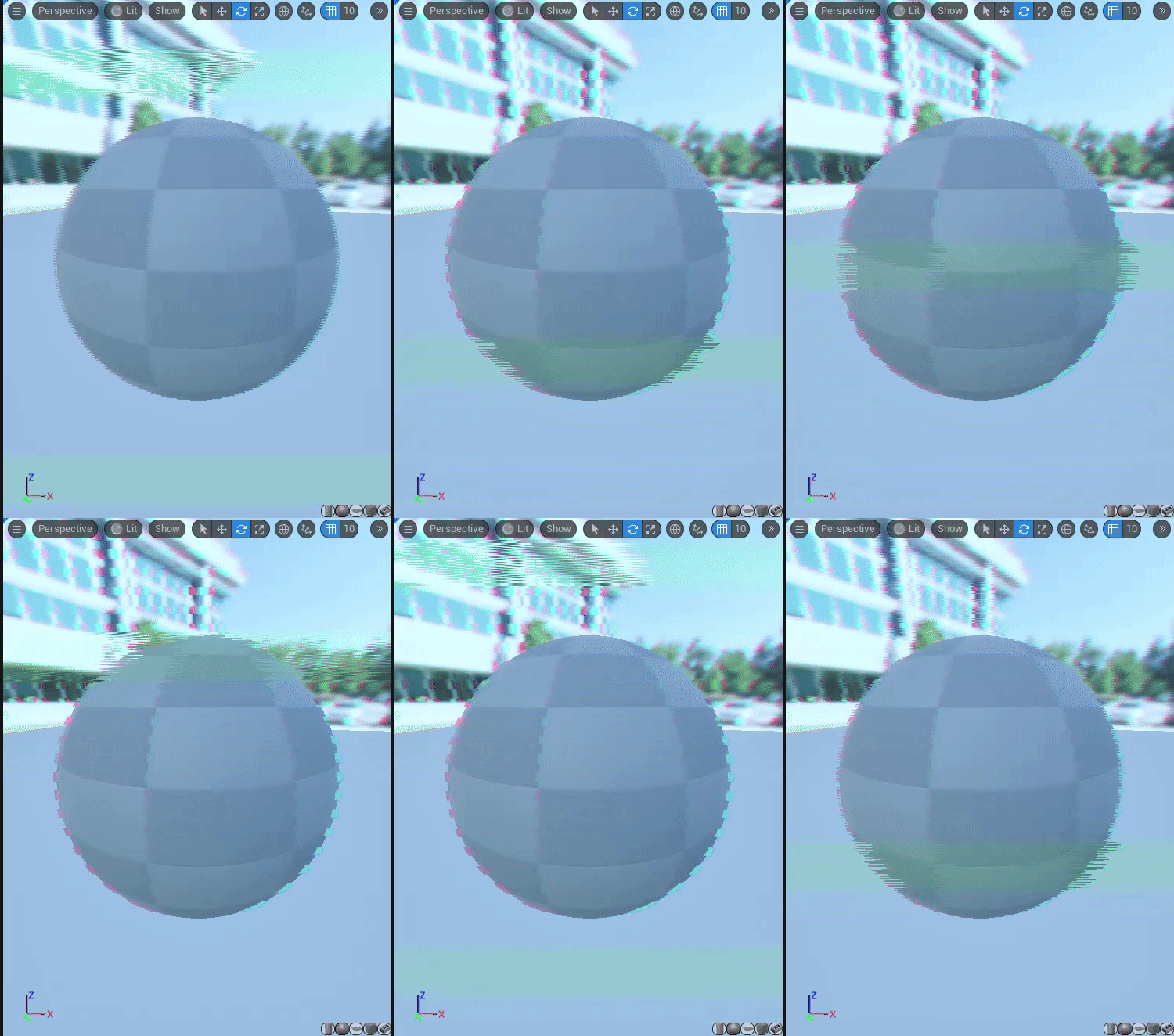
VHS distortion effect active in Parallax Protocol — June 2025
The Problem
What I was trying to solve
Parallax Protocol needed each of its three playable classes: Ghost, Psychic, and Hacker to feel visually distinct. VHS was the Hacker's identity. Post-process effects can be expensive — especially when every connected player needs a unique visual experience for the same environment. The challenge was building something that looked great but was cheap to run and easy to reuse.
What I Built
Technical breakdown
- Reusable scrambler function — modular noise function made using underlying distortion-math that drives both the scan line and chromatic aberration layers, callable from other materials
- Multiplayer optimization — rendered per player instance rather than from the level so that each player's chosen aesthetic was genuinely their own in the session
- Scan line overlay — UV-based horizontal banding with time-driven offset to simulate CRT refresh artifacts
 drag to pan
Reflection
What this taught me
I'm proud of how this one turned out, and it's one of the first shaders where I felt the math and the mood actually clicked together. Working with the lead programmer to optimize for multiplayer forced me to think about shaders not just as visual tools but as computational resources. The reusable scrambler function became a pattern I carried into the Spooky Post Process shader — it showed me the value of writing materials the way you'd write a good utility function in code.
Research Question
How can post-process shaders be architected as modular, composable systems rather than one-off effects — and what does that look like as a design pattern across real-time game engines?